Do you live more than an hour away from our physical studio, preventing you from traveling for an evaluation and private instruction? The practical solution is flexible online voice over training via live Zoom sessions.
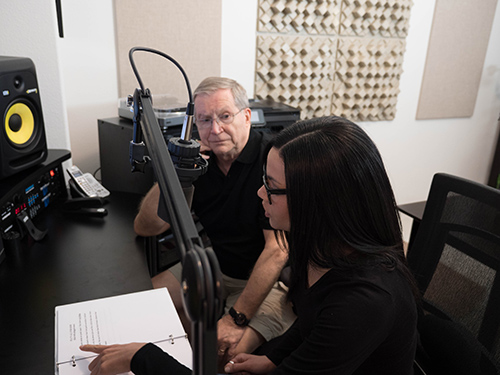
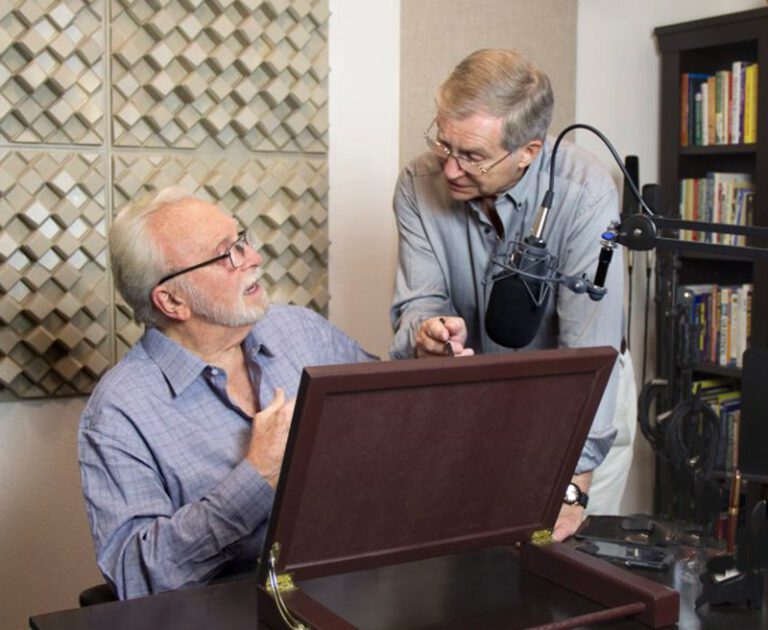
You and John hear each other on your respective speakers in full-range audio. The live video is full-frame and clear using detailed HD webcams. This remote setup provides an accurate representation of a live one-on-one voice over coaching session in the studio. You and John hear each other on your respective speakers with clean audio quality.
Where to Begin
First, an evaluation session should be scheduled to determine your level of ability. If the outcome of the evaluation is positive, a coaching strategy will be recommended that best fits your voiceover training needs.
Vocal Evaluation
For the beginning student, I recommend and require a two-hour in-depth analysis of your basic talent, cold reading ability, voice acting instincts, mastery of diction, and working knowledge of essential technical parameters, such as pace, pause, pitch, and timbre. We also cover script interpretation, redundancy, and points of vocal emphasis. You will deliver 15 short commercial scripts and 15 narration scripts that make up a varied mix of key categories characteristic of the professional voice over marketplace.
Fill out the Form for a Free Consultation or Call 941-914-0312.
You will receive a written evaluation, which will also be explained to you in the last half-hour of the session. The evaluation gets you off on a solid footing, as you and John know your strengths and areas that need work, and we will have determined whether or not you have the basic skills to pursue a voice over career.
The fee for the evaluation: 175.00 A two-hour, in-depth analysis of reading and interpretive abilities, as well as an assessment of fluency with English-language dynamics. The student will read and interpret an eclectic mix of 30 commercial and narration scripts, which are representative of most of the general categories characteristic of production requirements. Following the reads, John will discuss his specific assessments of the student’s present ability.
Online Instruction
In each online lesson, Zoom will record it for you, so that you may work with it as a lesson aid, in the same manner as we would record a live lesson in our studio.
When the time comes to do your demo, it can be done one of two ways: If you have a good recording studio in your area, we can set up recording time with that studio and record you via SourceConnect, or preferably, have you fly here and record you in my studio.
Want to know more about your voice over coach? Visit the About John page.
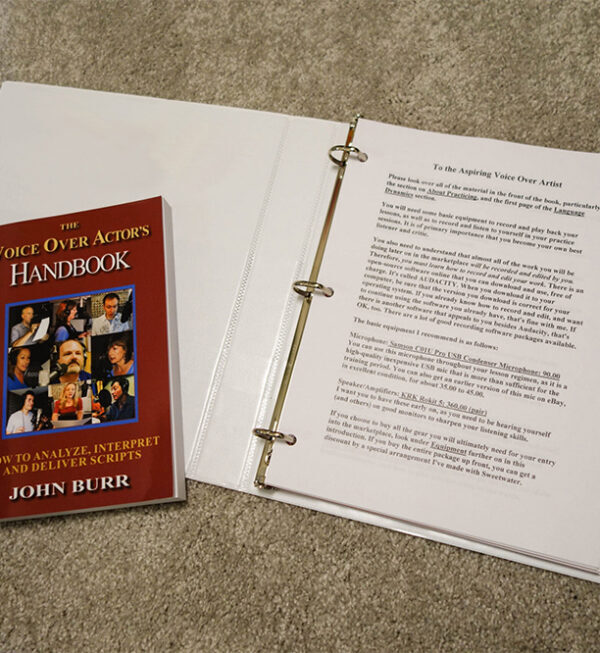
12-lesson online package, with 2 Script Sets and The Voice Over Actor’s Handbook: 1350.00
Price includes all instructional materials and shipping.
Fill out the form for a free consultation or call 941-914-0312.
Fill out the form for a free consultation or call 941-914-0312.